Gorilla trekking: Uganda or Rwanda?
The same animals, an hour with them either way, and a US$700 difference in the permit. Uganda charges US$800 and Rwanda US$1,500 in 2026 — what that money actually buys you.
Short answer: Uganda if the cost matters, Rwanda if the time does. The permit is US$800 in Uganda and US$1,500 in Rwanda in 2026. The gorillas are the same species, the hour you spend with them is the same hour, and the difference is almost entirely logistics and price.
Mountain gorillas live in one place on earth: the Virunga range and Bwindi, straddling Uganda, Rwanda and the DRC. Roughly half the world's population is in Bwindi alone.
The permit is the trip's biggest single cost
| Uganda | Rwanda | |
|---|---|---|
| Trekking permit, foreign non-resident | US$800 | US$1,500 |
| Habituation permit (4 hours) | US$1,500 | not offered |
| Time with the gorillas | 1 hour | 1 hour |
| Parks | Bwindi, Mgahinga | Volcanoes |
For two people that is a US$1,400 difference before anything else is booked — enough to pay for several nights of good accommodation, or to extend the trip by days.
Rwanda raised its permit deliberately, positioning itself as a low-volume, high-price destination. That is a legitimate conservation model and the money does go into it. But it does not buy you more time with the animals.
What Rwanda's price actually buys
Time, mostly, and it is not a small thing.
Volcanoes National Park is about two to three hours by road from Kigali International Airport, on good tarmac. You can land in the morning and trek the next day. A gorilla trip to Rwanda works as a long weekend.
Bwindi is roughly eight to nine hours' drive from Entebbe. You can fly to Kisoro or Kihihi instead and cut that to about an hour and a half in the air, but that is another cost and another fixed schedule to work around.
If you are travelling from Europe or North America with limited leave, Rwanda's premium is buying you two days back. Whether that is worth US$700 a head is a real question with no universal answer.
What Uganda's price buys
More trip for the money, and the habituation experience.
Uganda's US$1,500 habituation permit puts you with a gorilla family being habituated to humans for four hours rather than one, in a group of no more than four people. It costs exactly what an ordinary Rwandan permit costs, and it is the single best thing available to a visitor in either country.
Uganda also gives you somewhere to go afterwards. Queen Elizabeth National Park, the Kazinga Channel, Kibale's chimpanzees and Murchison Falls are all within reach of the same trip. Rwanda is a smaller country with a shorter list.
What the trek is actually like
The same in both countries, and harder than most people expect.
- Altitude between 2,100 m and 3,000 m, on steep ground, often wet.
- Anywhere from 30 minutes to six hours of walking to reach the family, and the same back. Nobody can tell you in advance which you will get.
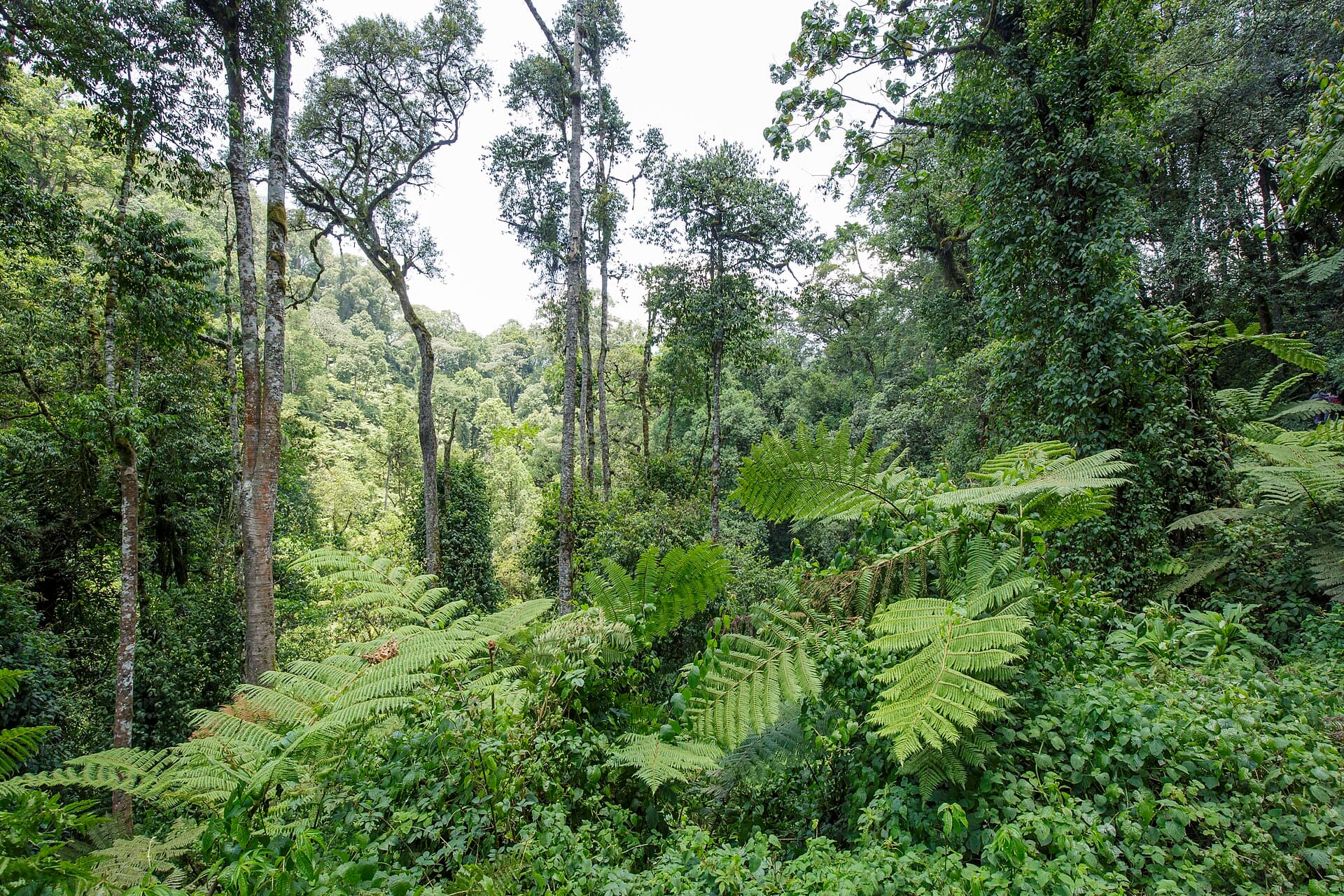
- Dense, wet vegetation. Bwindi is called impenetrable for a reason. Long sleeves, gaiters and gloves are worth carrying.
- A porter costs around US$20 and is worth every cent — for the help, and because it puts money directly into the villages bordering the park.
Reasonable fitness is enough. Being able to walk uphill for three hours in mud is the honest requirement.
Booking, and when
Permits are limited by design: eight visitors per gorilla family per day. Peak months — June to September and December to February — sell out months ahead, and Rwanda's smaller allocation goes first.
Book six months out for peak season. Your operator obtains permits on your behalf and will need passport details well in advance; this is not something to arrange on arrival.
The dry seasons are easier walking. The wet seasons are cheaper and the forest is at its most striking, and gorillas do not mind rain.
Which to choose
Uganda if: the cost matters, you want more than gorillas in the same trip, you want the four-hour habituation experience, or you have ten days or more.
Rwanda if: your time is tight, you want the simplest possible logistics, or you are combining the trek with somewhere else that connects easily through Kigali.
Either way: book early, take the porter, and treat the permit as the fixed cost it is — no operator can discount it, and one offering to should be a warning rather than a bargain.
Permit prices are 2026 rates set by the Uganda Wildlife Authority and the Rwanda Development Board. Both have risen in recent years — confirm before booking.